“Change is coming”… That’s what people are always saying. “Change is good” is another phrase we hear.
“Change” is also a word used to explain coins.
Well, further to our recent post regarding climate change / global warming here is an article which may bring a CHANGE to that story which is often thrown around, concerning which parts of the world are causing the majority of climate issues, namely emissions and related negatives, and instead give a different, perhaps more truer side to that story. Perhaps it really is the parts of the world which are RICHER and more developed causing much of this devastation.
Let’s have a read of that article:
One fact from this article we should highlight and indeed one which we at Thailand.org have been thinking of for a while, is:
“…when emissions are calculated on a per capita basis, Japan is the only Asian country to rank among the world’s top five. Historically, North America and Europe accounted for half the CO2 emitted since the Industrial Revolution, while China and India accounted for just 14 per cent.”


So, although China and India are also ‘up there’ it’s not necessarily when the stats are produced “per capita”, and surely it’s common sense that massive countries like those would produce a lot, on the whole, therefore per capita could be more apt. However, there really is no excuse for countries in Europe and North America should be causing this, and not least because it affects the world / themselves in general but even worse… by which we mean, poorer or developing countries.
This raised this point, as per the article:
“Due to these historical differences, developing countries have argued they should be allowed to continue increasing their emissions as they industrialise, while developed countries should curb their emissions as soon as possible.”
They then go on to raise this question:
How will climate change impact Asia?
“Asia is regularly identified as one of the regions that will be hardest hit by the global warming. The UN Framework Convention on Climate Change noted that Asia’s large population, the frequency of natural disasters in the region, and a sometimes chaotic process of urbanisation, with population relocation to coastal cities, as some of the factors that make Asia especially vulnerable to the risk of climate change.
Rising temperatures have caused Himalayan glaciers to melt, increasing the risk of floods and landslides during monsoon season. Long-term, permanent disappearance of the glaciers could affect the flow of major Asian rivers, including the Yangtze, the Mekong and the Brahmaputra.
“Melting polar ice caps mean the sea level is expected to rise between one and three metres by 2100. In China’s coastal areas, the population at risk by a one-metre rise stands at 23 million people, while a three-metre rise would affect 52 million people. Up to 71,000 square kilometres of Chinese coastal areas could be left underwater.
that produce 88 per cent of the world’s rice supply, are under risk of disappearing under the sea.
In Vietnam, just half a metre rise can endanger most of the Mekong River Delta, that cultivates half of the country’s rice supply, says the Asia Foundation.”
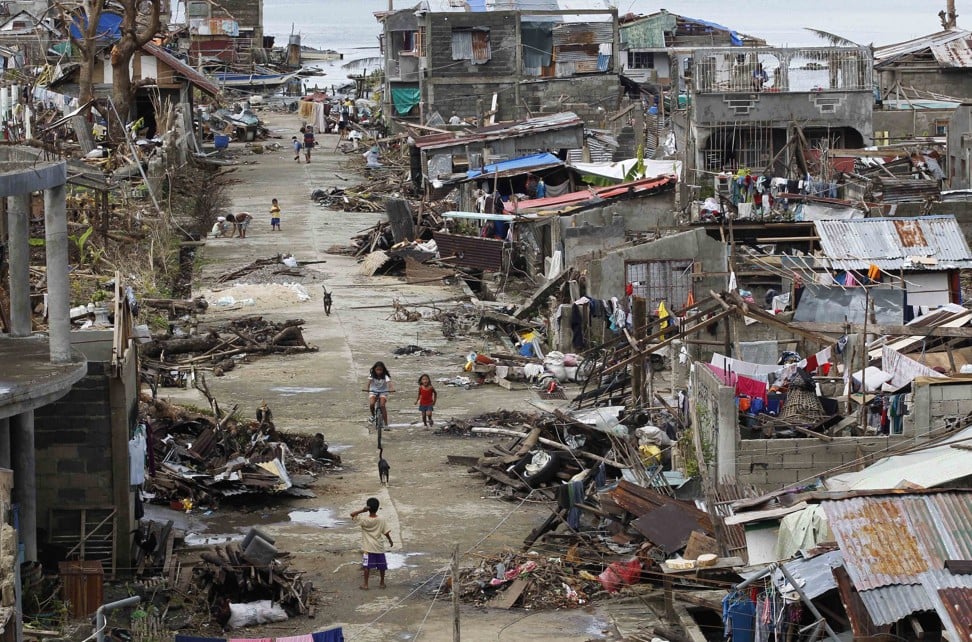
“What are Asian countries doing to tackle the issue?
The Paris Climate Agreement was signed by 195 countries in an ambitious attempt to prevent global temperatures rising 2 degrees Celsius from pre-industrial levels. The US has since withdrawn from deal but most countries remain committed.
China, in particular, has presented itself as an international climate champion and aims to invest US$361 billion in renewable energy between 2016 and 2020. It is on track to meet its key targets by 2030 – this includes increasing the percentage of non-fossil fuels in its energy mix to 20 per cent and capping annual carbon dioxide emissions by 2030.”
“India successfully developed a thriving renewables industry and has promised to increase renewables to 40 per cent of its power generation by 2030. In 2018, 74 per cent of the added power capacity of the country was based on renewable energy, mainly solar.”
WHO IS REALLY MORE TO BLAME HERE? COUNTRIES IN THE WEST, OR THOSE IN THE EAST?
THOUGHTS WELCOMED!
More to follow, in a future article.
For now, you may be interested in this other article of ours:
https://theirland.org/2020/04/11/west-beats-east-east-meets-west/
*****

 Theirland